
You post a photo of your new sneakers, and a friend comments “okay flex 😏.” Or someone at work mentions their promotion a little too casually, and you think, “that’s such a flex.” If you’ve seen this word everywhere lately but aren’t totally sure what it means, you’re not alone — flex is one of those slang terms that’s been around for decades but has taken on a whole new life online.
This guide breaks down exactly what flex means, where it came from, how people use it today, and the difference between a genuine flex and a “weird flex.” By the end, you’ll know exactly how to use it (or spot it) the next time it shows up in your texts or feed.
What Does Flex Mean?
In slang, flex means to show off — to display wealth, success, style, skill, or possessions in a way that’s meant to impress or draw attention. It can be used as both a verb and a noun, and the tone can range from genuine bragging to playful teasing.
Here’s the simplest way to understand it:
- As a verb: “He’s flexing his new watch.” (He’s showing it off.)
- As a noun: “That watch is a flex.” (The watch itself is the impressive display.)
Unlike a plain compliment, flex almost always carries a bit of attitude — either admiration, mockery, or a mix of both, depending on who’s saying it and why.
Where Does the Slang “Flex” Come From?
The word’s roots are completely literal. Flexing originally just meant tightening your muscles, like a bodybuilder showing off their physique. Over time, that physical display of strength became a metaphor for displaying any kind of power, status, or advantage — money, looks, achievements, relationships, you name it.
The slang version of flex moved into mainstream pop culture through hip-hop in the 1990s, where it became shorthand for flaunting wealth or status. From there, it spread into everyday conversation, and social media gave it a second wind, turning it into one of the most commonly used slang terms across platforms like Instagram, TikTok, and Twitter/X.
How Flex Is Used Today
Flex shows up constantly in casual conversation, comment sections, and captions. The meaning stays consistent, but the tone shifts depending on the situation.
| Context | What It Usually Means |
|---|---|
| Social media caption | Showing off an achievement, outfit, or purchase |
| Text message | Calling out a friend for bragging, playfully or seriously |
| Comment section | Reacting to someone else’s impressive (or try-hard) post |
| In-person conversation | Describing someone’s confident or boastful behavior |
| Gaming communities | Showing off rare items, high ranks, or skilled plays |
Flex as a Verb
Used this way, flex describes the act of showing something off.
- “She’s flexing her new car on Instagram.”
- “He always flexes about his grades.”
- “Don’t flex your internship just to make everyone jealous.”
Flex as a Noun
Here, flex refers to the thing or moment itself.
- “That trip to Bali was such a flex.”
- “Getting into that school is a serious flex.”
- “Nice flex, but we all know you borrowed that bag.”
Types of Flexes You’ll See Online
Not every flex looks the same. Here are the most common categories people run into.
- The genuine flex – A real accomplishment shared with pride, like landing a dream job or finishing a marathon.
- The humble brag – Bragging disguised as a casual comment, like “ugh, I’m so tired from traveling to three countries this month.”
- The weird flex – Showing off something that isn’t actually impressive, often used sarcastically.
- The ironic flex – Joking about something small as if it were a huge accomplishment, purely for laughs.
- The petty flex – Showing off specifically to make someone else feel bad or jealous.
What Is a “Weird Flex”?
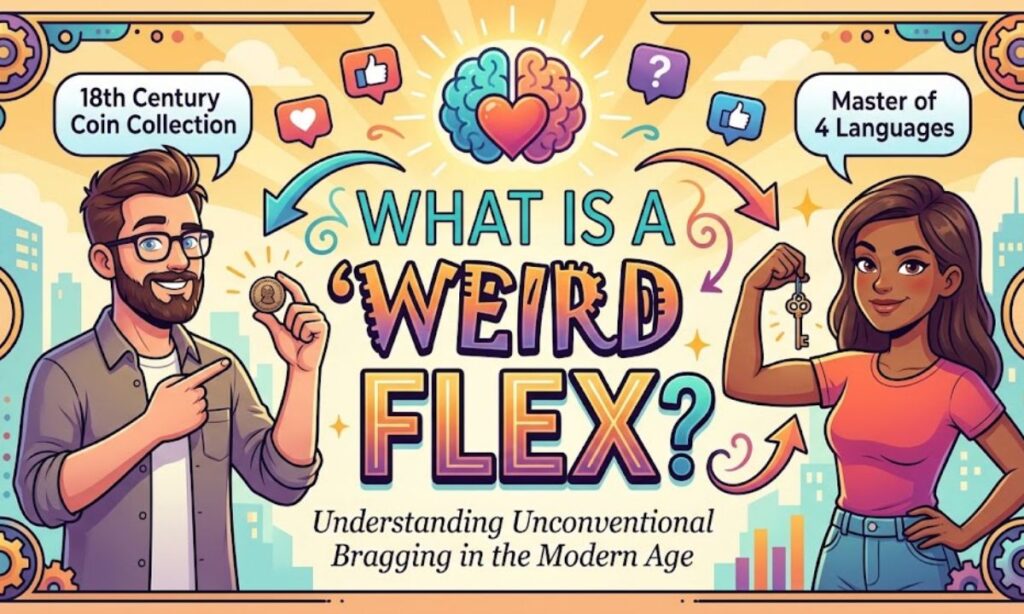
A “weird flex” is one of the most popular spin-off phrases, usually written as “weird flex, but okay.” It’s a sarcastic response used when someone brags about something that isn’t actually impressive, or that nobody asked about.
For example:
- “I once ate 12 hot dogs in one sitting.” → “Weird flex, but okay.”
- “I haven’t cried in six years.” → “That’s a weird flex, honestly.”
The phrase works because it mimics the structure of a genuine compliment while quietly mocking the person for bragging about something odd, random, or even a little concerning.
Is Flex Positive or Negative?
This is where a lot of confusion comes from, and the honest answer is: it depends entirely on context and tone.
| Signal | Likely Meaning |
|---|---|
| Said with excitement or admiration | Genuine compliment, often between friends |
| Said flatly or with “weird” attached | Sarcastic, mocking, or teasing |
| Used in a caption about your own post | Playful self-awareness, often lighthearted |
| Said about someone bragging excessively | Criticism of arrogance or insincerity |
A flex between close friends is usually playful and supportive. A flex aimed at a stranger online, especially one who’s clearly showing off for attention, tends to carry more judgment.
Flex vs. Similar Slang Terms
Flex often gets grouped with other status-related slang, but each word has its own specific meaning.
| Term | Meaning | How It Differs from Flex |
|---|---|---|
| Flex | Showing off something impressive | Focuses on the act of displaying |
| Drip | Stylish, impressive fashion or appearance | Specifically about looks, not achievements |
| Clout | Social influence or popularity | About status and reach, not a single display |
| Humble brag | Bragging disguised as a casual comment | A sneakier, less obvious form of flexing |
| Showing off | General term for drawing attention to oneself | Less tied to internet culture, more neutral |
Flex stands out because it can apply to almost anything — money, looks, relationships, achievements, or even oddly specific personal facts — while terms like “drip” stay narrowly focused on style.
How to Use Flex in a Sentence
Here are a few natural examples showing flex in different situations.
- “Honestly, getting front-row tickets was such a flex.”
- “He can’t go five minutes without flexing his new job title.”
- “That’s a low-key flex, not gonna lie.”
- “No flex intended, I just got lucky with the timing.”
- “She flexed her whole vacation album in one Instagram story.”
Notice how “no flex intended” is a common phrase people use to downplay something impressive they just shared, softening it so it doesn’t come across as arrogant.
Flex Beyond Slang: Other Common Meanings
While this guide focuses on the slang definition, it’s worth knowing that “flex” shows up in other non-slang contexts too, which can occasionally cause confusion.
- Fitness: Flexing a muscle, like during a workout or bodybuilding pose.
- Scheduling: “Flex time” or “flex hours,” referring to flexible work schedules.
- Materials: Describing something bendable, like flex cables or flexible plastic.
- Business names: Brands like Amazon Flex, Ford Flex, or Paychex Flex use the word to suggest flexibility or adaptability, unrelated to the slang meaning.
Context almost always makes it obvious which meaning is intended.
Why Flex Became So Popular in Internet Culture

Social media rewards visibility, and flex captures exactly that dynamic. A single word efficiently labels the entire behavior of posting something to impress others, whether that’s a new purchase, an achievement, or a lifestyle moment. It’s short, expressive, and works equally well as a genuine compliment or a pointed critique, which is part of why it has stuck around far longer than many other slang terms.
Frequently Asked Questions
What does flex mean in slang?
Flex means to show off or display something impressive, like wealth, achievements, style, or possessions.
Is flex a compliment or an insult?
It can be either. Tone and context decide whether flex sounds like admiration or mockery.
What does “weird flex but okay” mean?
It’s a sarcastic response to someone bragging about something that isn’t actually impressive.
Can flex be used as both a noun and a verb?
Yes. As a verb, it describes the act of showing off; as a noun, it describes the impressive thing itself.
Where did the slang term flex come from?
It comes from the literal act of flexing muscles, later adopted by hip-hop culture to mean flaunting status or wealth.
Is flexing always seen negatively?
No. Among friends, a flex is often playful and supportive rather than arrogant.
What’s the difference between flex and drip?
Flex refers to showing off generally, while drip refers specifically to stylish fashion or appearance.
Final Thoughts
Flex has grown from a simple gym term into one of the most flexible (pun intended) slang words in modern vocabulary. Whether it’s used to genuinely celebrate someone’s win, gently tease a friend, or call out an unnecessary brag, the meaning always comes back to one thing: showing off, on purpose, for an audience. Once you know how to read the tone behind it, you’ll never second-guess a “flex” comment again.